What Exactly Is ADA and WCAG Website Compliance? A Simple Guide for Business Owners
One of the most common questions I hear from business owners is:
“What exactly is ADA and WCAG website compliance?”
The easiest way to explain it is this:
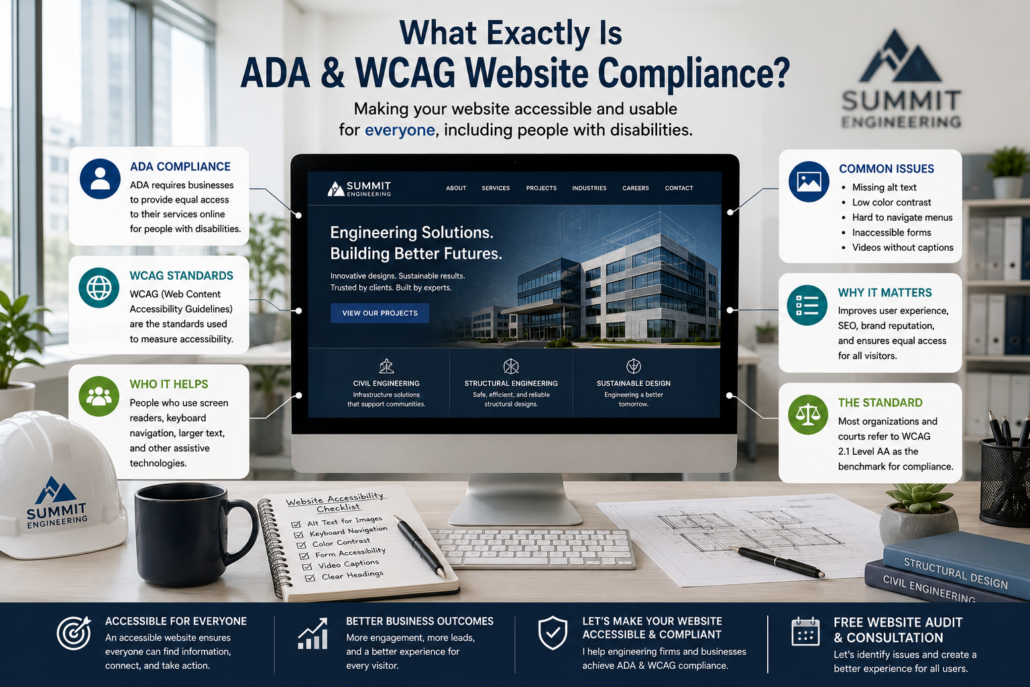
ADA website compliance means making your website accessible and usable for people with disabilities.
WCAG stands for Web Content Accessibility Guidelines, which are the standards most organizations, accessibility professionals, and courts use to measure website accessibility.
The goal is to make websites easier to use for everyone, including people who rely on assistive technologies to browse the internet.
What Is Website Accessibility?
Website accessibility means designing and maintaining your website so users of all abilities can properly access and navigate your content.
This includes people who may use:
- Screen readers
- Keyboard navigation instead of a mouse
- Larger text or zoom features
- Color contrast adjustments
- Voice navigation
- Other assistive technologies
An accessible website helps ensure all visitors can:
- Read your content
- Navigate menus
- Submit forms
- Contact your business
- Access services online
Accessibility is not just about compliance — it is about creating a better experience for every visitor who comes to your website.
Why Many Businesses Don’t Realize Their Website Has Accessibility Issues
One of the biggest challenges with website accessibility is that many problems are invisible to the average business owner.
A website may appear completely normal during everyday use, while still containing barriers for users relying on assistive technologies.
This is especially common on older websites that were built years ago before accessibility standards became more widely discussed.
Common ADA and WCAG Website Accessibility Problems
Some of the most common accessibility issues I see on business websites include:
Missing Alt Text on Images
Images without descriptive alt text can create problems for visitors using screen readers because the software cannot properly describe the image content.
Low Color Contrast
Text that blends too closely into the background can make content difficult to read for users with visual impairments.
Difficult Navigation
Buttons, menus, and navigation elements that are difficult to access with a keyboard or assistive technology can make websites frustrating or unusable for some visitors.
Inaccessible Forms
Forms without proper labels or structure can create barriers for users trying to contact your business or submit information.
Videos Without Captions
Videos lacking captions or transcripts may prevent users with hearing impairments from fully accessing your content.
Poor Mobile Usability
Many older websites are not optimized for modern mobile accessibility standards, creating usability issues across phones and tablets.
Why ADA and WCAG Compliance Matter for Businesses
More businesses are becoming aware of website accessibility because of:
- Increased legal attention
- Growing ADA website lawsuits
- Updated accessibility expectations
- Increased focus on user experience
But accessibility improvements provide benefits far beyond compliance alone.
Improving website accessibility can also help:
- Improve SEO rankings
- Improve mobile usability
- Increase customer trust
- Improve user experience
- Reduce bounce rates
- Increase conversions
- Improve website performance
Many accessibility best practices overlap directly with modern SEO and website optimization strategies.
Accessibility and SEO Often Work Together
One thing many business owners do not realize is that accessibility improvements often improve SEO as well.
For example:
- Better heading structure helps both users and search engines
- Alt text improves accessibility and image SEO
- Faster mobile performance improves usability and rankings
- Better navigation improves both user experience and crawlability
An accessible website is often a more organized, user-friendly, and search-friendly website overall.
If you are also trying to improve your website’s visibility online, you may find these resources helpful:
Website Design & Development Services
You may also want to read:
Why More Businesses Are Paying Attention to ADA Website Compliance
Is ADA Website Compliance Mandatory?
Many business owners also ask whether ADA website compliance is legally required.
Websites for businesses that are open to the public are generally expected to provide accessible digital experiences.
The Department of Justice has repeatedly interpreted the ADA as applying to websites and digital content.
Learn more here:
Is ADA Compliance Mandatory for Websites?
How I Help Businesses Improve Website Accessibility
I help local businesses:
- Identify accessibility issues
- Improve ADA and WCAG compliance
- Modernize outdated websites
- Improve mobile usability
- Optimize user experience
- Simplify accessibility remediation
My goal is to make website accessibility understandable and practical without overwhelming business owners with confusing technical jargon.
I also help businesses improve:
- Website performance
- SEO structure
- Mobile responsiveness
- Lead generation
- Website usability and organization
If your website also needs improvements in performance or lead generation, you may find these articles helpful:
Why Your Marketing May Not Be Generating Leads
Website Hosting vs Domain Name Explained
Not Sure Where Your Website Stands?
If you are unsure whether your website meets modern accessibility standards, you are not alone.
Many business owners simply have never had their website properly audited for:
- Accessibility
- SEO
- Mobile usability
- Website performance
- User experience
I offer free website audits and consultations to help businesses better understand where improvements may be needed.
Learn more about ADA website compliance services here:
ADA Website Compliance Services
Learn more about my services here:
Website Design & Development Services
Book your free consultation:
Need help? Fill out this form to get started right away.