How Website Speed Impacts SEO, User Experience, and Lead Generation
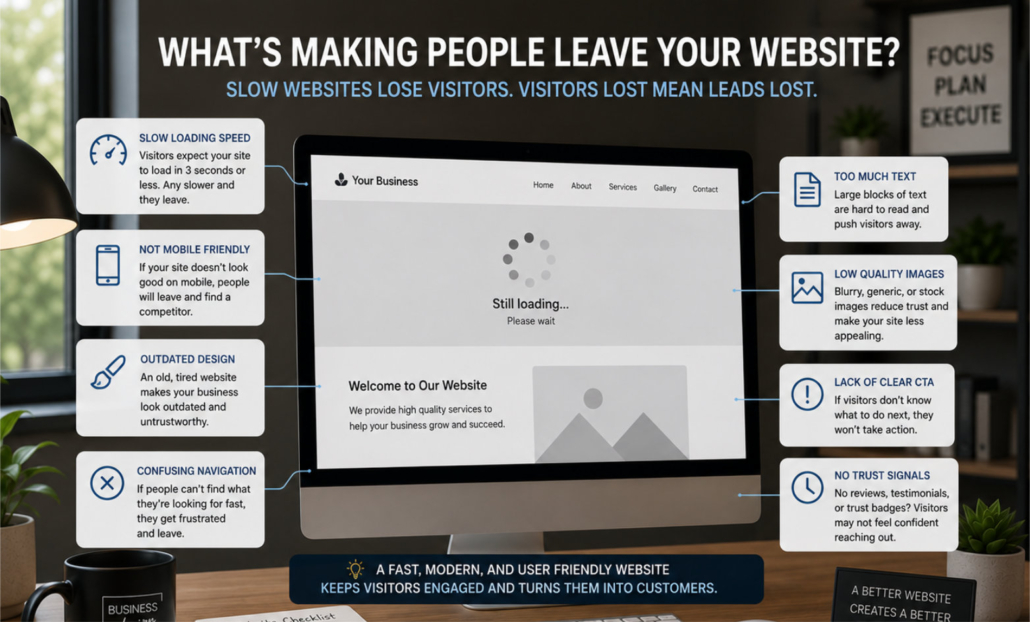
How Website Speed Impacts SEO and Leads
One of the most overlooked problems on many business websites is speed.
Most business owners focus on how their website looks, but they do not always realize how much website speed affects search rankings, user experience, and lead generation. A slow website can quietly cost you traffic, leads, and sales without you even realizing it.
People expect websites to load quickly. If a page takes too long, most visitors leave before they even see your content or contact your business.
Google also pays close attention to website speed when ranking websites in search results. Faster websites generally provide a better experience, which is exactly what search engines want to prioritize.
If your website feels slow, outdated, or clunky, there is a good chance it is affecting both your SEO and conversions.
Why Website Speed Matters for SEO
Google wants to send users to websites that provide a good experience.
Website speed is one of the factors that impacts how Google evaluates your site. While speed alone is not the only ranking factor, it directly affects several important SEO metrics.
A slow website can lead to:
- Higher bounce rates
- Lower engagement
- Fewer pages visited
- Reduced time on site
- Poor mobile experience
- Lower conversion rates
When users quickly leave your website because it loads slowly, search engines notice that behavior.
Over time, this can hurt your rankings and make it harder for potential customers to find your business online.
Slow Websites Lose Leads
This is the part many business owners do not realize.
Every second matters when someone visits your website.
If your site loads slowly, visitors often leave before they:
- Fill out a contact form
- Call your business
- Book an appointment
- Request a quote
- Read about your services
- View your portfolio or products
People are impatient online. They usually compare multiple businesses at once, and the faster, smoother website often wins.
A slow website creates friction and frustration, especially on mobile devices where most traffic now comes from.
Mobile Speed Is More Important Than Ever
Many business owners only check how their website looks on desktop computers.
The problem is that most customers are visiting from their phones.
A website that loads fine on desktop may perform poorly on mobile if it is not properly optimized.
Common mobile speed issues include:
- Oversized images
- Poor hosting
- Too many plugins
- Excessive animations
- Unoptimized code
- Large video files
- Outdated website themes
Google primarily uses mobile performance when evaluating websites, which means mobile speed directly affects SEO.
If your mobile experience is slow or difficult to use, it can negatively impact both rankings and lead generation.
Common Causes of Slow Websites
I work with many small business websites that have speed issues caused by things the owner may never notice themselves.
Some of the most common problems include:
Poor Hosting
Cheap hosting often leads to slow load times, especially during traffic spikes.
Large Images
Uploading huge image files without optimization is one of the biggest speed killers on business websites.
Too Many Plugins
Some WordPress websites become overloaded with unnecessary plugins that slow everything down.
Outdated Themes or Builders
Older website themes and page builders can create bloated code that affects performance.
No Caching or Optimization
Without proper caching, compression, and optimization settings, websites work harder than they need to every time someone visits.
Third Party Scripts
Too many tracking scripts, popups, or external integrations can significantly slow down load times.
Website Speed Also Impacts Trust
Speed affects more than SEO.
It also affects how trustworthy and professional your business appears online.
When a website is slow, broken, or laggy, visitors often assume:
- The business is outdated
- The company may not be reliable
- Communication could be slow
- The customer experience may be poor
Even if your services are excellent, a slow website can create a bad first impression before someone ever contacts you.
A fast, clean website immediately feels more professional and credible.
Simple Ways to Improve Website Speed
The good news is that many website speed issues can be improved without rebuilding your entire website.
Some of the biggest improvements usually come from:
- Compressing and optimizing images
- Upgrading hosting
- Cleaning up unnecessary plugins
- Improving mobile optimization
- Enabling caching
- Reducing unused scripts and code
- Optimizing Core Web Vitals
- Updating outdated website software
Even small improvements in speed can lead to better rankings, lower bounce rates, and more conversions over time.
The Bottom Line
Website speed directly impacts SEO, user experience, and lead generation.
A slow website does not just frustrate visitors. It can also reduce search visibility and cost your business valuable leads every month.
Most business owners spend money trying to get more traffic when the real issue is that their website is losing visitors before they ever convert.
Improving website speed is one of the smartest investments you can make because it helps both search rankings and customer experience at the same time.
Book a Free Website Audit and Consultation
If your website feels slow, outdated, or underperforming, I offer free website audits and consultations to help identify speed, SEO, accessibility, and conversion issues that may be hurting your business online.
Book your free consultation here:
https://businessdesigninnovations.com/#contact
You can also learn more about website design and development services here:
https://businessdesigninnovations.com/website-design-development-san-clemente
I am always happy to help fellow business owners understand what improvements can make the biggest impact for their website and marketing.