Why You Should Have an ADA Compliant Website for Your Small Business

Learn why an ADA compliant website matters for small businesses. Improve accessibility, user experience, search visibility, and protect your business while serving customers in San Clemente and South Orange County.
Should You Have an ADA Compliant Website?
Many physical businesses follow the Americans with Disabilities Act by adding ramps, elevators, and other accessibility features. Online businesses often forget that accessibility matters just as much on the web.
Website accessibility is not about stairs or doors. It is about making sure everyone can use your site, including people with visual, hearing, or mobility challenges. With online shopping and digital services becoming the norm, businesses should make accessibility a priority.
It sounds simple, but in reality many websites fall short. If you are unsure whether your website is ADA compliant, here is why it matters.
About ADA Compliance
The internet helps people stay connected, especially those who face barriers in the physical world. It is easy to assume that websites are accessible by default, but that is not true.
ADA compliance depends on how real people use your website. Some visitors rely on screen readers or voice tools. Others zoom in heavily to read text. If your layout breaks, text overlaps, or navigation stops working when someone uses assistive tools, your site may not be accessible.
Understanding your users and how they interact with your site is the foundation of ADA compliance.

What Is ADA Compliance
ADA compliance means following accessibility standards under the Americans with Disabilities Act. When the law was introduced in 1990, it did not focus on websites because the internet was still new.
As digital tools became essential to daily life, accessibility rules expanded. Businesses were expected to make electronic information usable for people with disabilities, including those with vision or hearing loss.
These rules apply to many businesses, especially those with more than fifteen employees and those that serve the public. This includes hotels, banks, and public transportation services.
Why Websites Should Follow ADA Standards
If your business falls under ADA requirements, accessibility is not optional. Companies that ignore accessibility have faced lawsuits and fines.
Even if legal action never happens, an inaccessible website still hurts your business. Visitors cannot become customers if they cannot use your site.
An accessible website welcomes more people and creates a better experience for everyone.

Eight Benefits of an ADA Compliant Website
Higher Search Visibility
Accessible websites often perform better in search results. Clear headings, descriptive text, and organized content help both users and search engines understand your site.
More Website Visitors
When your site is easier to use and easier to find, more people visit it. Accessibility supports better structure and clearer content, which increases visibility.
More Customers
Many people use screen readers or other tools to browse online. When your site works well with those tools, visitors are more likely to stay, trust your brand, and become customers.
Stronger Creative Collaboration
Designing for accessibility encourages thoughtful problem solving. Teams must consider different user needs, which leads to better design and cleaner code.
Faster Page Load Times
Accessible sites are often better maintained. Clean code, clear structure, and regular updates improve performance and speed.
Better Brand Reputation
Accessibility shows that your business cares about inclusion. This builds trust and creates positive brand perception.
Fewer Legal Risks
Accessible websites reduce the risk of complaints and legal action. Many accessibility lawsuits focus on websites that exclude users with disabilities.
Healthier Business Growth
More visitors, better engagement, and stronger trust all support long term growth. Accessibility supports revenue, partnerships, and advertising opportunities.
How to Make a Website ADA Compliant
Know the ADA Guidelines
Start by understanding accessibility standards. Accessibility applies to more than vision and hearing. It also includes mobility challenges, learning differences, and cognitive needs.
Add Alt Text to Images
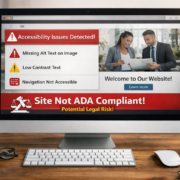
Alt text helps describe images for screen readers. This includes photos, graphics, and maps. Descriptions should be clear and meaningful.
Use Descriptive Links
Avoid vague link text. Instead of generic phrases, use clear wording that explains where the link goes.
Support Keyboard Navigation
Not everyone uses a mouse. Your site should work using keyboard commands like tab, enter, and arrow keys. Popups should be easy to close without clicking.
Check Other Media
Documents, forms, and downloadable files must also be accessible. If users cannot read or interact with them, the website experience breaks down.
Include Skip Navigation Options
These links help users jump to main content and avoid repetitive menus. They are especially helpful for screen reader users.
Use Proper Headings
Headings should follow a clear order and structure. This helps users scan content and navigate pages easily.
Use High Contrast Colors
Text should be easy to read. Avoid light text on light backgrounds. Strong contrast improves readability for everyone.
Add Captions to Videos
Videos should include captions or transcripts so people with hearing loss can understand the content. Captions should be clear and easy to read.
Quick Ways to Check Accessibility
Make sure all images and videos include text alternatives.
Confirm the site works with a keyboard and screen reader.
Test your site at high zoom levels.
Avoid long copied web addresses in text.
Label buttons and menus clearly.
Run accessibility checks before launching.
If your website is not fully accessible, you are not alone. Many sites have gaps in accessibility. The important thing is that improvements can always be made.
An accessible website creates a better experience for users, protects your business, and supports long term success. Making accessibility part of your website strategy is a smart move for your business and your audience.
Contact me today to get your website fully ADA compliant. Set up a 15 minute call so I can go over the steps and answer any questions.